RealGM Analysis
Perusing the Major League Baseball standings, I am thinking about two teams that made a concerted and fairly significant shift in philosophy this offseason. Before I go into how these teams? philosophy changed, a quote from Jermaine Dye?s agent, Bob Bry, strikes me as rather poignant, ??the emphasis on defense has reached the level of absurdity.? In this day and age of advanced statistics, developing ways to measure defensive aptitude has long been a goal of stat geeks who have more advanced analytical minds than me. While Mr. Bry?s comments are obviously self-serving, as his client no longer excels at playing the field, I think he may be onto something here. I don?t think Bry had any other intention but to promote his client by touting the stronger part of his game, offense. What he did do is challenge a belief that is currently sweeping through MLB and the people who follow it closely, that these defensive metrics are infallible and contribute in large part towards determining how good a team was, is or will be.
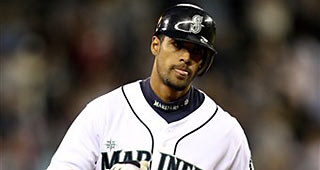
The two teams I mentioned above are the Boston Red Sox and the Seattle Mariners. Both of the front offices of these squads set in motion a fairly significant overhaul on the defensive side of the ball (some might say at the expense of their offense). Boston, long known as a team built around offense, signed such defensive specialists as Adrian Beltre and Mike Cameron, while the Mariners acquired, via trade or free agency, Chone Figgins, Casey Kotchman and Jack Wilson (at the trade deadline last season). All five of these players were assumed to be fixtures in the lineups for their respective teams as well as defensive wizards. I realize that Cameron is injured, but the premise here is that Jason Bay was not re-signed by the Red Sox due to the concern that he would not hold up in the field and that his defense was so atrocious that it weighed down his value to the point that he wouldn?t be worth the contract he would eventually sign.
The defensive metric that paints these players in such a positive light is none other than fangraphs.com?s UZR/150 (ultimate zone rate per 150 games). UZR/150 is defined by fangraphs as, ?The number of runs above or below average a fielder is, per 150 defensive games.? Simply put, if a player finishes a season at 15 UZR/150, if he were to play exactly 150 games, the assumption is that he had saved his team 15 runs more than that of an average fielder at his position. Baseball fans all across the internet use this statistic to determine whether a player will provide value on both sides of the ball. Fangraphs.com also uses this statistic in conjunction with their offensive numbers to grade the player as a whole. An extreme example of how much defense factors into their equation is this: according to their overall rating system (WAR), in 2009, Randy Winn was a more valuable player than Adam Dunn. Go to your favorite baseball stats website and look at their respective seasons at the plate and ask yourself how bad Adam Dunn?s defense would have to be for you to prefer to start Randy Winn over him in your outfield.
Before embarking on this analysis, I had a goal in mind of trying to determine the relationship between how a team performs with respect to UZR/150 and where that team finishes the season in the standings. I used the 2009 season for the analysis.
Based on the premise that performance in three different categories, hitting, pitching and defense, determine a team?s success, I employed three different variables: OPS, FIP (fielding independent pitching) and UZR/150. I then ranked all of the teams in baseball on all three of these variables and compared these rankings to the record they finished with (i.e. the Yankees won 103 games and are ranked first, the Angels won 97 games and are ranked second, so on and so forth).
Once these rankings were complete, I then compared the difference in rankings five different ways. These comparisons were done in absolute value, so as to only determine how far away from their actual final ranking they were and not how much better or worse they fared.
1) Combo: An average of a team?s ranking in OPS, FIP and UZR/150 [(OPS rank + FIP rank + UZR/150)/3] compared to their ranking in the final standings.
MLB Teams, on average, ranked 5.7 spots different than their OPS, FIP and UZR/150 indicated they should have.
2) Combo2: An average of a team?s ranking in OPS and FIP [(OPS rank + FIP rank)/2] compared to their ranking in the final standings.
MLB Teams, on average, ranked 4.8 spots different than their OPS and FIP indicated they should have.
3) UZR/150: A team?s ranking in UZR/150 compared to their ranking in the final standings
MLB Teams, on average, ranked 10.0 spots different than their UZR/150 indicated they should have.
4) OPS: A team?s ranking in OPS compared to their ranking in the final standings
MLB Teams, on average, ranked 5.9 spots different than their OPS indicated they should have.
5) FIP: A team?s ranking in FIP compared to their ranking in the final standings
MLB Teams, on average, ranked 7.3 spots different than their FIP indicated they should have.
What this analysis tells me is that of the three variables compared, UZR/150 is the worst indicator of team success. The best indicator of the three is OPS, essentially meaning that, according to this comparison, having a good offense is far more important than having a good defensive team. While it would be foolish of me to posit that defense is unimportant, what I do suggest is that it has much less to do with winning than offense and pitching does. I absolutely do not believe that offense, pitching and defense are three equal parts when determining how good a baseball team is. While it is only a guess, I would assign the following weights to the three facets of the game with regard to the importance of each when judging the overall strength of a team: 50% offense, 40% pitching, 10% defense. If I apply these weights to the original combined comparison:
1) MLB teams, on average, ranked 4.8 spots different than their OPS (50%), FIP (40%) and UZR/150 (10%) indicated they should have.
Please don?t misunderstand the point of this exercise. I truly believe baseball players should ably field their position, but it is getting to the point where a player?s defense is being overvalued. By the time a player reaches the big leagues, for the most part, I believe he is capable of playing passable defense, or else he wouldn?t be there (obviously, we are disregarding the DH position). Major League teams don?t normally toss a player onto the field unless that is the case, no matter how well you hit. I am just of the belief that the distance between passable and outstanding defense is not as wide of a spectrum that some people think it is, and this analysis seems to support that hypothesis. With all due respect to those developing methods to decipher who is flashing the most leather on the diamond, for the record, I would choose Adam Dunn?s 2009 season over Randy Winn?s 100 times out of 100 if given the chance.
I realize that this comparison has a few flaws in that the difference in leagues is not accounted for, what with there being nine ?real? hitters in an American League lineup and eight in the National League. What I had hoped would even out the difference is that AL teams would rank higher in OPS, but lower in FIP, overall, and vice versa for the NL. Additionally, FIP is not a perfect statistic to rank pitching, but I chose it instead of ERA because FIP attempts to eliminate the influence that the defense has on a pitcher?s ERA, and we were already measuring the effect that defense has on a team?s success by using UZR/150. So, while this analysis isn?t perfect, I think it does have some value in demonstrating how the influence defense has on a team?s success may be getting overblown as of late.