RealGM Analysis

You undoubtedly have noticed that the Philadelphia Phillies just recently added a piece to their rotation in Cliff Lee that puts them in the conversation for the most talented group of starters a team has ever assembled. With Roy Halladay, Lee, Roy Oswalt and Cole Hamels, at the very least this quartet is comfortably the best in the game today on paper.
Everyone who?s anyone assumed that Lee, this offseason?s marquee free agent, would chase down every last dollar he could, which usually means you end up playing in the Bronx. When he shocked the baseball world and signed with the Phillies for less years and less money, it raised a lot of eyebrows for several reasons.
The Yankees Don?t Get Their Man
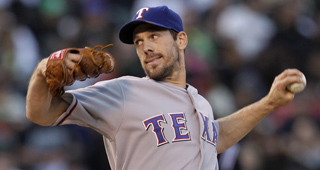
Even prior to the outset of the 2010 season, a year that saw Lee don two uniforms, it was widely assumed that he would be wearing pinstripes in 2011. When the new ownership group took over in Texas and the Rangers promptly made a run to the World Series, it was seen as the dawn of a new day in the Lone Star State. Reports of the Rangers being serious players for the services of Lee circulated, leaving him with seemingly two suitors.
Even then, I can?t imagine that the Yankees were too worried about the whole thing, because, really, were the fledgling owners in Arlington going to be able to match the boatloads of cash that Brian Cashman and company were going to dump on the southpaw?s doorstep? It didn?t even seem like a remote possibility that they would lose out on the best starting pitcher to hit the market since CC Sabathia in 2008, a player the Yankees were successful in signing.
The Yankee brass? psyche isn?t the only thing that is damaged by this decision, however. As it stands, their starting rotation is unmistakably weak. By sporting a top three of Sabathia, Lee and Phil Hughes, New York would have felt a lot more comfortable with A.J. Burnett and a run of the mill fifth starter rounding out front five. Now that the only sure things are Sabathia and Hughes (calling him a sure thing is even a stretch right now), a playoff spot is far from a lock. And we all know that playoff berths are not what motivates the Yankees, as it is World Series or bust every single year.
If the season started tomorrow, Ivan Nova and Sergio Mitre would be the fourth and fifth starters that the Yankees would trot out to the mound. Mitre is a 30-year-old who likely isn?t getting any better at this stage in his career and he hasn?t been anything special to date, especially as a starter. In 64 career starts, Mitre has compiled a 5.48 ERA, 1.557 WHIP and an unimposing 5.2 K/9. In a Yankee uniform, the numbers aren?t much different and there really isn?t anything to suggest that that will change in 2011. All that said, his career numbers suggest that he can fill a useful role in a bullpen.
Nova is much younger than Mitre, at just 23 years old, so there is a chance he could drastically improve upon his 2010 performance. However, the Yankees rarely rely upon a player of his tenure to provide a bulk number of innings. Until 2010, his breakout year in AAA, Nova?s minor league numbers are rather ho-hum, having posted a 4.01 ERA, 1.41 WHIP and 5.99 K/9 in his first four years in the Yankees? system. If anything, New York would be much more comfortable with Nova making spot starts rather than planning on him contributing 32 starts or so over the course of the 2011 season.
Surely, the Yankees will be scouring the trade market for any and all available starters to fill out their rotation. The best available starter is none other than the all-to-familiar Carl Pavano, who decided to start pitching like a number two or three starter over the past couple seasons after basically robbing the Yankees for the previous four. There is a better chance of Roger Clemens coming out of retirement to pitch at Yankee Stadium than them going through another Pavano experiment. The problem with trying to trade for a frontline starter now is that everyone in the game knows that they are desperate, so the Yankees will most likely have to overpay. Who will be the one to give up that kind of pitcher in exchange for what could be a very attractive package of prospects?
The Players Union
Initially, when news of the Lee signing hit, reports had the contract at five years and $100 million. When compared to what the Yankees and Rangers had offered, it appeared as though Lee had left roughly $50 million on the table. Obviously, that wasn?t the case, but I?m sure that the first impression left a bad taste in the collective mouths of the MLB Players Union.
More information has come to light in the days following the Lee signing regarding the offers that were on the table from the three teams involved. They are as follows:
? The Yankees offered $138 million over six years with a vesting option for a seventh year valued at $16 million, bringing the total value of the contract to $154 million.
? The Rangers offered $138 million over six years with a vesting option for a seventh year valued at $23 million, bringing the total value of the contract to $161 million.
? The Phillies offered $107.5 million over five years with a vesting option for a sixth year valued at $27.5 (with a $12.5 million buyout), bringing the total value of the contract to $135 million.
If the above information is correct, then, amazingly, the offer from the Rangers actually was more lucrative than that of the Yankees. Think about that. Even if the Phillies didn?t figure into the equation, the boys in pinstripes probably still would have lost out on their man.
The point of this is to realize that, yes, Cliff Lee did turn down offers that were for more guaranteed money than the contract that he did end up signing. This is what will upset the Players Union. However, the money is very, very close if you view all of the offers as six year deals. In this case, you must assume that the option vests on the Phillies? offer by way of Lee pitching either 200 innings in 2015 or a total of 400 innings combined in 2014 and 2015. If you view it in this light, Lee left $3 million on the table.
Where the union might have a beef is if the contract only ends up being for five years. If this is the case, then Lee will only collect $120 million over that period, including the $12.5 million buyout. That would break down to an average annual value of $24 million, which is more per year than both the Yankees and Rangers offered. However, $28 million in guaranteed money would be left on the table in this instance.
Nobody will know how to appropriately calculate the difference in contract values until it is determined whether or not Lee?s options would have vested. But any way you slice it, Lee signed for less money and less years than he could have. It just remains to be seen how much less.
The Phillies? Payroll
Perhaps the most significant reason for the Lee signing having shocked the baseball world was Philadelphia?s willingness to join the upper echelon of payroll spenders in MLB. By my estimation, the Phillies leapfrogged both the Red Sox and the Cubs in this category and there really isn?t an end in sight. A lot of the Philadelphia regulars are signed long term, so the front office appears to be committed to maintaining the level of payroll that they just established.
With all of the information that is available, I have estimated the 2011 payroll for Philadelphia will be just over $170 million. As recently as 2008, the Phillies sported a player payroll of roughly $98 million, which was an all time high for them. Two years later, that figure has risen 74% and become the second highest in baseball.
The question that was certainly pondered by the Philadelphia ownership and front office was simple: Are we prepared to set a precedent with regards to total player payroll with the trade-off being that we assemble the best starting rotation in the game of baseball? We all know what their answer was now, but it must have been something they had wrestled with since they were eliminated by the San Francisco Giants in the National League Championship Series.
The ironic thing is that we know the answer to almost the exact same question one year ago was a resounding ?No.? That is essentially what they were saying when they acquired Halladay and shipped out Lee on the same day one year ago. What changed during that time frame? One thing is for sure, and that is the fact that they saw a dominant starting rotation roll right past them and on to a World Series title. Pitching wins in October and Philadelphia now has it in the form of a rotation headed by four starters who would each be the ace of two thirds of the teams in the game.
Now, the only team with a higher payroll is the New York Yankees. Obviously, the offseason isn?t over, so the order is definitely subject to change. However, the point still stands. Philadelphia ownership has shown that they are completely committed to fielding the most competitive team possible over the next few years. Since extravagant spending doesn?t necessarily always lead to championships, it remains to be seen how this collection of high-priced talent will translate on the baseball field.
One thing is for sure, opposing hitters won?t be looking forward to seeing the Philadelphia Phillies and their four-headed ace on the upcoming schedule in 2011.
More stories: