By Neema Hodjat
With spring training well underway in Arizona and Florida, major league teams are not the only ones evaluating players – astute fantasy managers are neck deep in scouting as well. If you happen to be a bit behind, no worries, as you have an easy-to-use cheat sheet below.
Fantasy managers use several different evaluation methods to prepare for fantasy baseball drafts, but the tier system provides the best draft preparation, in my opinion. Ranking the players from best to worst without further analysis leaves gigantic holes in your scouting report. Let’s take a look at an extreme example, but nevertheless one that will hammer the point home. At the shortstop position, you will see Hanley Ramirez and Troy Tulowitzki rated as the #1 and #2 players, respectively. You will see Derek Jeter (my selection) or possibly Jose Reyes or another player rated as the #3 shortstop. The important piece of information here is that after Tulowitzki, there is a significant drop-off in the remaining players, starting at the #3 spot.
I have emphasized this point by leaving the Tier 2 shortstop rankings vacant. Ramirez and Tulowitzki are being consistently selected in the top 10 picks of the 2011 drafts, while Derek Jeter, the #3 ranked shortstop, has been going roughly 40 selections later in the 4th-5th rounds. A chart listing the top shortstops in numerical order would not show this dropoff, however. With the tier system in place, once Ramirez and Tulowitzki are off the board, you know that there is no need to reach for Jeter with Jose Reyes, Jimmy Rollins and the other Tier 3 shortstops still available. Players need to be evaluated in tiers; keep an eye on how many players remain from the applicable tier, and don’t feel the need to reach for a player when several players from the same tier remain.
The rankings below are based on the standard five by five categories (R, HR, RBI, AVG and SB for hitters and W, ERA, WHIP, K and SV for pitchers). Players being listed in the same tier mean that I expect the players to have roughly the same value as each other for this coming season. Accordingly, losing out on selecting one player from the tier, but instead selecting another player from the same tier should not cause a significant drop in production. So, when your tenth round pick comes up, for example, and you note that you still have a vacancy at second base, you do not need to rush to fill the spot if there are several players from the same tier available. If you miss out on Gordon Beckham, then Kelly Johnson, Aaron Hill, etc. will all fill in just fine. I will share a few thoughts on the rankings for each position, and will conclude at the end of this article with some final thoughts on draft strategy.
Catcher
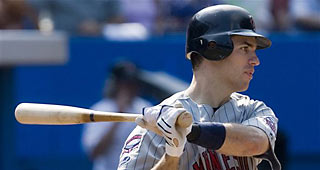
Tier 1: Joe Mauer, Victor Martinez, Buster Posey
Tier 2: Brian McCann, Carlos Santana, Geovany Soto
Tier 3: Mike Napoli, Miguel Montero, Matt Wieters, Kurt Suzuki
Tier 4: Jorge Posada, J.P. Arencibia, John Buck, Chris Ianetta, Carlos Ruiz
Tier 5: Yadier Molina, AJ Pierzynski, Miguel Olivo, John Jaso, Ryan Doumit, Russell Martin
Analysis:
I am generally not a fan of drafting catchers with early draft picks. Catchers get injured more often than players at other positions, and even when not injured, they tend play less games during the season due to wear and tear. I am a Buster Posey fan, but let someone else in your league draft him in the fourth round. I would rather draft Carlos Santana four rounds later. I have Geovany Soto ranked a bit higher than others, and would be happy to land him as my catcher. Kurt Suzuki, the tenth ranked catcher on my board, and the last member of Tier 3, will provide you with solid numbers at a fraction of the cost of some of the players ranked ahead of him. J.P. Arencibia is a high upside player in Tier 4, in case you want to roll the dice.
First Base
Tier 1: Albert Pujols
Tier 2: Miguel Cabrera, Joey Votto, Adrian Gonzalez
Tier 3: Prince Fielder, Mark Teixeira, Kevin Youkilis, Ryan Howard,
Tier 4: Adam Dunn, Victor Martinez, Kendrys Morales, Paul Konerko, Justin Morneau, Buster Posey, Billy Butler
Tier 5: Aubrey Huff, Adam Lind, Carlos Pena, Adam LaRoche, Derrek Lee, Lance Berkman, James Loney
Tier 6: Gaby Sanchez, Mike Napoli, Mitch Moreland, Michael Cuddyer, Ike Davis, Freddy Freeman, Justin Smoak, Daric Barton, Matt LaPorta, Garrett Jones
Analysis:
Albert Pujols still reigns supreme at first base. I was tempted to put Miguel Cabrera in Tier 1 with him, but those plans were foiled with his early spring training off field issues. But don’t drop him from the first round – he will play and will have a great season. First base is the deepest infield position, and you do not need to select one early. In OBP leagues, Adam Dunn will get a boost in ranking. I also feel that Paul Konerko is underrated. He quietly puts up big numbers, but doesn’t get much attention. Other tidbits: I am concerned about Justin Morneau’s health with his concussion, and I would not be surprised if Adam Lind and Carlos Pena have nice seasons (certainly better than the seasons they had last year). I certainly expect them to outperform their draft slot.
Second Base
Tier 1: Robinson Cano
Tier 2: Dustin Pedroia
Tier 3: Ian Kinsler, Chase Utley, Dan Uggla, Brandon Phillips, Rickie Weeks
Tier 4: Martin Prado, Gordon Beckham, Kelly Johnson, Ben Zobrist, Aaron Hill, Chone Figgins
Tier 5: Howie Kendrick, Brian Roberts, Neil Walker
Tier 6: Tsuyoshi Nishioka,Freddy Sanchez, Mike Aviles, Ryan Raburn, Placido Polanco, Juan Uribe, Sean Rodriguez, Mark Ellis, Danny Espinosa
Analysis:
The gap between Robinson Cano and the rest of the field is quite large, now that Chase Utley’s season has become uncertain due to injury. Dustin Pedroia will put up good numbers, but you have to account for injury concerns with him as well, and the same for Ian Kinsler. Further down this list you will find some useful players, so you can be just fine if you miss out on Cano. Look for Aaron hill and Chone Figgins to rebound from last season’s numbers, and hopefully Gordon Beckham’s second half last season provides a sign of things to come this year.
Third Base
Tier 1: Evan Longoria
Tier 2: David Wright, Ryan Zimmerman, Alex Rodriguez, Kevin Youkilis*
Tier 3: Adrian Beltre, Jose Bautista
Tier 4: Casey McGehee, Aramis Ramirez, Martin Prado, Michael Young, Pablo Sandoval, Pedro Alvarez, Mark Reynolds
Tier 5: Ian Stewart, Chase Headley, Placido Polanco, David Freese, Edwin Encarnacion, Jose Lopez
Tier 6: Scott Rolen, Juan Uribe, Ty Wigginton, Jhonny Peralta, Danny Valencia
Analysis:
Third base is top heavy. If you can land a stud, do it. If not, there are some serviceable options, but you face a major drop off. Please note that Kevin Youkilis will most likely gain 3B eligibility in your league sometime after the first 5 to 20 games, depending on your league rules. I don’t expect 50+ homers again, but I do think that Jose Bautista’s 2010 season was legit. Casey McGehee flies under the radar, and I like him more than others. He quietly puts together good numbers, and I would much rather have him than Mark Reynolds. The uncertainty around Michael Young (potential trade, position issues) concerns me, and I have him rated a bit lower than others.
Shortstop
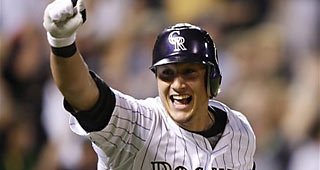
Tier 1: Hanley Ramirez, Troy Tulowitzki
Tier 2: --
Tier 3: Derek Jeter, Jose Reyes, Jimmy Rollins, Alexei Ramirez, Elvis Andrus
Tier 4: Stephen Drew, Ian Desmond, Rafael Furcal, Starlin Castro
Tier 5: Erick Eybar, Asdrubel Cabrera, Alcedes Escobar, Yunel Escobar, Juan Uribe, JJ Hardy
Tier 6: Ryan Theriot, Marco Scutaro, Reid Brignac, Miguel Tejada, Alexi Casilla, Jason Bartlett
Analysis:
As mentioned earlier, Hanley Ramirez and Troy Tulowitzki have no peers at shortstop other than each other. The first three players in Tier 3 are risks due to age/decline, injuries or both. If you do not have the chance to grab either Ramirez or Tulowitski, then I would recommend waiting a while (and maybe a long while) before selecting a shortstop. The other names don’t really excite me, and as such, you might as well strengthen your other positions and pick as shortstop later.
Outfield
Tier 1: Ryan Braun, Carl Crawford, Carlos Gonzalez
Tier 2: Matt Holiday, Matt Kemp, Josh Hamilton
Tier 3: Shin-Soo Choo, Justin Upton, Andrew McCutchen, Jason Heyward, Nelson Cruz
Tier 4: Andre Ethier, Alex Rios, Jose Bautista, Jayson Werth, Ichiro Suzuki, Colby Rasmus, Hunter Pence, Jay Bruce, Jacoby Ellsbury, Mike Stanton, Shane Victorino, Delmon Young
Tier 5: Torii Hunter, Curtis Granderson, Brett Gardner, Chris Young, BJ Upton, Adam Jones, Nick Markakis, Carlos Quentin, Drew Stubbs, Jason Bay, Nick Swisher, Michael Bourn, Ben Zobrist
Tier 6: Corey Hart, Bobby Abreu, Vernon Wells, Adam Lind, Grady Sizemore, Carlos Lee, Jose Tabata, Aubrey Huff, Angel Pagan, Juan Pierre, Manny Ramirez, Travis Snyder, Austin Jackson, Vladimir Guerrero, Carlos Beltran, Rajai Davis, Franklin Gutierrez
Analysis:
The good news is that there’s plenty of talent in the outfield. Even the players listed in Tier 4 are capable of putting up fantastic numbers. I would have ranked Josh Hamilton in Tier 1 if I trusted his health. Colby Rasmus is poised for a breakout season, and I would not be the least bit surprised if Mike Stanton cleared the 35 homer mark. I have given up on Nick Markakis becoming anything more than an average outfielder, and would prefer to go with Adam Jones if I had the choice. Nick Swisher flies a bit under the radar, as managers underrate his power potential. You should not have a problem filling your outfield with quality players.
Starting Pitcher
Tier 1: Roy Halladay, Felix Hernandez, Tim Lincecum, Cliff Lee
Tier 2: Jon Lester, Justin Verlander, Clayton Kershaw, Ubaldo Jimenez, CC Sabathia
Tier 3: David Price, Yovani Gallardo, Dan Haren, Jered Weaver, Tommy Hanson, Chris Carpenter
Josh Johnson, Matt Latos, Matt Cain, Zack Greinke, Cole Hamels, Roy Oswalt
Tier 4: Francisco Liriano, Max Scherzer, Chad Billingsley, Matt Garza, Ted Lilly, Shaun Marcum, Tim Hudson, Wandy Rodriguez, John Danks, Clay Buchholz, Brett Anderson, Hiroki Kuroda, Jonathan Sanchez
Tier 5: Jeremy Hellickson, Brandon Morrow, Colby Lewis, Ricky Nolasco, Daniel Hudson, Jhoulys Chacin
Tier 6: Phil Hughes, Johnny Cueto, Madison Bumgarner, Ryan Dempster, Trevor Cahill, Jamie Garcia, Ricky Romero, Brian Matusz, CJ Wilson, Josh Beckett, Jordan Zimmerman
Tier 7: Ian Kennedy, Edinson Volquez, James Shields, Bronson Arroyo, Jake Peavy, Joel Pineiro, Jair Jurrjens, Wade Davis, Gavin Floyd, Annibal Sanchez, Randy Wolf, James McDonald, Michael Pineda, Scott Baker, Jorge De La Rosa, Dallas Braden, Javier Vazquez, John Lackey, John Garland, Ervin Santana, Jake Westbrook, Kyle Drabek
Analysis:
I love the pitchers in Tier 1. That being said, I love several pitchers resident in Tier 4. Shaun Marcum should post good numbers in Milwaukee. Hiroki Kuroda remains a WHIP master. If only Brett Anderson can stay healthy, I can see a great season from him. Jordan Zimmerman, Brian Matusz, Ricky Romero – these guys have enormous talent levels, and will surprise no one if they have terrific seasons. So, with strong pitching depth, my inclination is to wait on drafting starting pitchers. If you go back to drafts in previous years and compare the draft positions with the pitchers’ ranks at the end of the season, you will find significantly more volatility than with position players. Pitchers have much bigger injury risks as well. Unless you play in a pitching dominated scoring league, I would spend most of my top ten draft picks selecting position players. You can still build a strong pitching staff with the guys from Tier 5 and on. Not a bad idea to select one stud pitcher in the early rounds, but you will be just fine if you collect the bulk of your staff later.
Relief Pitcher
Tier 1: Brian Wilson, Heath Bell, Mariano Rivera, Joakim Soria
Tier 2: Neftali Feliz, Carlos Marmol, Jonathan Papelbon, Jonathan Broxton, Francisco Rodriguez, Joe Nathan, Andrew Bailey
Tier 3: JJ Putz, Chris Perez, John Axford, Huston Street, Jose Valverde
Tier 4: Ryan Franklin, Francisco Cordero, Drew Storen, Craig Kimbrel, Matt Thornton, Frank Francisco
Tier 5: Brad Lidge, Brandon Lyon, Leo Nunez, Kevin Gregg, Fernando Rodney
Tier 6: David Aardsma, Aroldis Chapman, Joel Hanrahan, Jake McGee, Chris Sale, Ryan Madson, Brandon League
Analysis:
The common adage that you should never pay for saves is correct. Relief pitching from year to year has even more volatility than starting pitching. Nearly a third of the league’s closers will lose their job due to performance or injury during the season. I usually do not draft my first closer until the middle rounds. If you can keep an eye on the waiver wire during the season, you will have the opportunity to add closers as things change during the season. In the draft, take a flyer on a player such as Jake McGee. Every season, a few players will come out of nowhere to end up with 30+ saves. Don’t overpay for saves.
Closing Analysis
In summary, first base and outfield have a deep supply of good players. Third base has some great talent at the top, as does shortstop, with a steep dropoff after the top (especially with shortstop). Second base has one stud, some decent players behind him, with serviceable players rounding out the position. If you have the opportunity, I would recommend grabbing the top players at second, third and shortstop to the extent that they are available. Otherwise, do not reach for the remaining players at these positions. Instead, shore up some other positions, such as outfield and first base.
With pitching comes risk, and I therefore would not select too many pitchers early in the draft. The likelihood of a pitcher busting is far greater than that of a hitter. Draft wisely, draft well and best of luck to you in your season.
I would love to hear from you if you have any comments or questions. I can be reached at [email protected].
 RealGM Analysis

More stories: