RealGM Analysis
The Yankees have the seventh-oldest roster in Major League Baseball, but their everyday players have quite a bit of wear on their tires. The average age on their roster is 29.9, but their healthy starting lineup?s average is 31.5 if you put Lance Berkman in the designated hitter role.
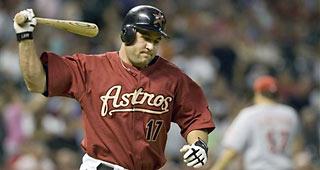
That brings us to one of New York?s two deadline deals, the acquisition of Berkman from the Astros for right-hander Mark Melancon and infield prospect Jimmy Paredes. The Yankees also received cash from the Astros as part of the deal.
This trade would not have even been discussed if expected DH Nick Johnson hadn?t struggled with injuries yet again. Since Johnson went down May 8 with a wrist injury, Joe Girardi has used the slot as a revolving door of sorts.
With Berkman now available to him, Girardi can institute some stability at designated hitter while also giving Mark Teixeira some time off a first base down the stretch. It also appears possible that Berkman might play in right field on occasion as well, giving the Yankees further flexibility.
In terms of contract status, Berkman has a $15 million club option for 2011 that includes a $2 million buyout. The former life-long Astro had said that he wouldn?t want the option picked up if he was traded prior to the deadline. If things work out in New York, general manager Brian Cashman certainly won?t bristle at paying $2 million for his buyout and offering Berkman $5-7 million to return to the Bronx.
Berkman has also hovered around an OPS just over .950 in his career, but is easily having a career worst .794 this season. He?s still patient though, a sign that he isn?t anxious at the plate despite hitting .242. He?s struck out 71 times and walked on 60 occasions.
His BABIP (Batting Average on Balls in Play) is just .275, significantly lower than his career mark of .317. Those types of things generally even themselves out and it wouldn?t surprise me to see Berkman get his average to a more respectable .260 over the final two months of the season.
Back in 2006, Berkman's HR/FB percentage was at 24.6% and it has gradually declined in each season since and is now at 15.1%.
Grade for Yankees: B-
The problem with the addition of Berkman is that adding a younger bat may have added a different wrinkle to the New York lineup. Instead, Berkman, who fits right into the recent Yankee mold, isn?t going to add youth to one of the league?s older teams.
He?ll also create a logjam at designated hitter when the Yankees are at full-strength. Jorge Posada has the most appearances at DH this season, but Girardi has given Teixeira, Derek Jeter, Alex Rodriguez and Nick Swisher half-days off as well. If anything, the addition of Berkman is going to indirectly reduce the playing time of young catcher Francisco Cervelli and utility infielder Ramiro Pena.
As the games increase in importance this season, Girardi will be forced to keep Posada in the lineup at catcher if Berkman is the DH and even if one of New York?s infielders gets the day off, Berkman is around to plug a few of the holes.
The Astros decision to deal Berkman was more emotional than the Roy Oswalt/Phillies trade and their haul in return isn?t as strong.
Melancon hasn?t produced at the Major League or Triple-A level as expected, but his fastball can still hit 95 mph and he has rebounded from Tommy John surgery (2007).
Paredes is a 21-year-old infield prospect from the Dominican Republic and will have more value for Houston than Melancon. Scouts expect him to eventually move from second base to center field, but he?ll find a position because of his offensive tools.
Grade for the Astros: C+
Houston?s grade would have been higher if they had forced New York to pay more of Berkman?s remaining salary. The Astros sent $4 million to the Yankees to offset the $7.5 million remaining on the first baseman?s contract.
---------------------------------------
In addition to adding Berkman, the Yankees landed reliever Kerry Wood from the Indians for a player to be named later or $500,000 (Cleveland also dealt outfielder Austin Kearns to New York in a separate move).
New York didn?t pay a high price for Wood, but his value is lower than ever before.
Cleveland will be responsible for $2.17 million of Wood?s remaining $3.6 million salary.
Wood has pitched just 20 innings in yet another injury-plagued season and will join a group of relievers that will try to bridge the gap to legendary closer Mariano Rivera. Wood is a question mark himself, but gives Girardi another option aside from the struggling Joba Chamberlain and others for the eighth-inning role.
He has struck out a batter per inning this season, a rate lower than that of his prime. Of course, at age 33 Wood would still be in his prime had it not been for all the injuries he?s endured.
Wood has lost a bit of his control this season as well, which has to be a concern for the Yankees. However, it?s worth considering that he has only provided us with a small sample size of data.
Grade for Yankees: B+
I?m not sure New York would have paid any more for Wood even if Cleveland demanded a mid-level prospect or more cash. The Yankees have had bullpen issues with Phil Hughes in the starting rotation this season and Chamberlain struggling in the seventh and eighth inning.
They were linked to Scott Downs, but the Blue Jays simply wanted too much for the left-hander.
Grade for Indians: B
Cleveland has to be happy to part with Wood, who was a supreme disappointment especially this season. They?ll save $1.5 million by dealing the reliever to New York. The savings could jump to $2 million if they opt to accept $500,000 instead of the infamous ?player to be named? later.
Andrew Perna is Deputy Editor of RealGM.com. Please feel free to contact him with comments or questions via e-mail: [email protected]. You can also follow Andrew on Twitter: APerna7.
Andrew Perna writes on the MLB and NBA for RealGM.
Follow @Andrew_Perna on Twitter.